



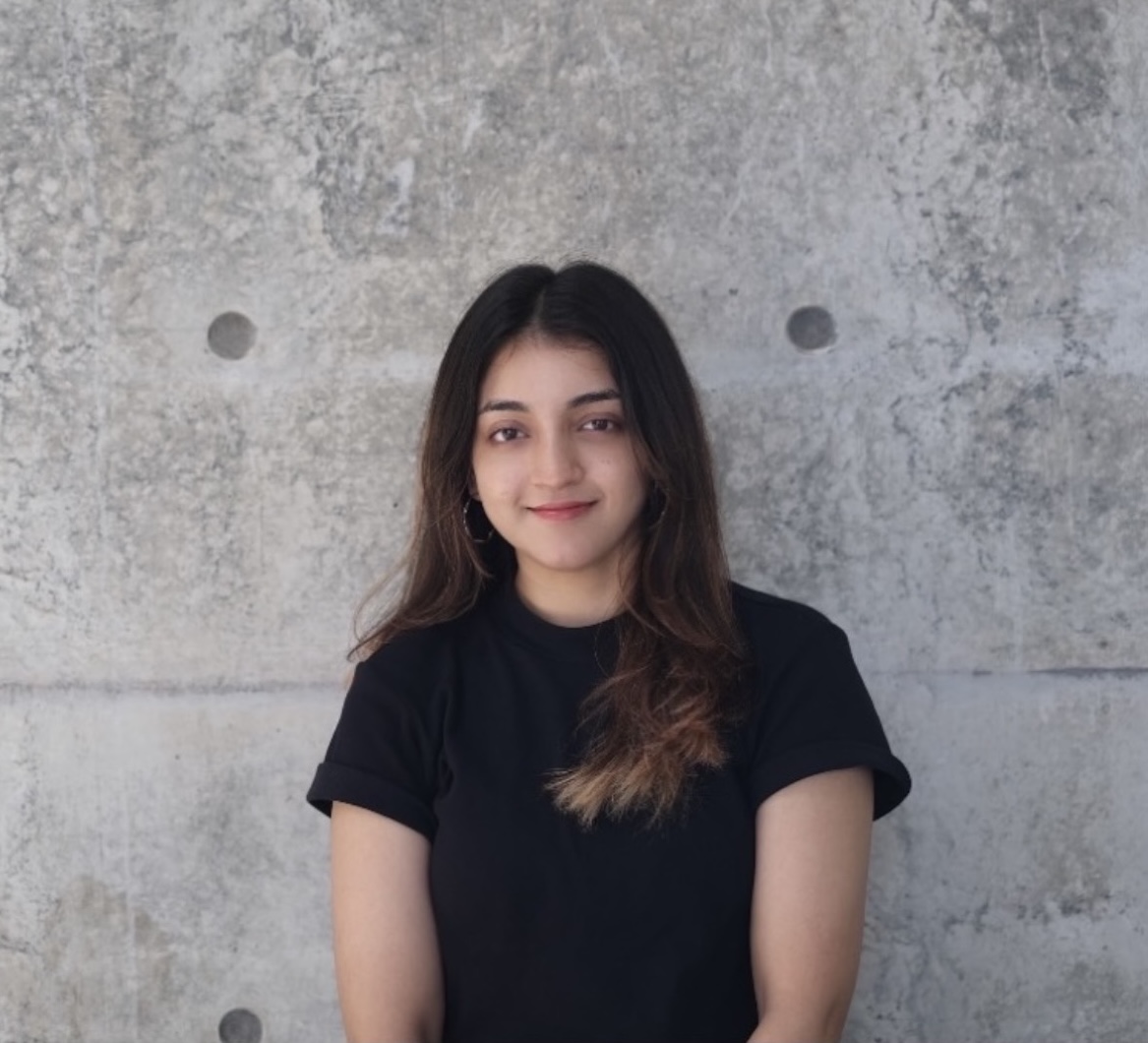
Tayyeba’s capstone project stands out as an exemplary piece of undergraduate research for its intellectual depth, methodological sophistication, and strong social relevance. Drawing on an ambitious mixed-methods design, she skillfully investigates how post-alveolar retroflex variation among South Asians in Hong Kong reflects broader dynamics of generational identity, education, and belonging. Her analysis is both linguistically rigorous and ethically grounded, incorporating over 6,000 tokens of phonological data alongside rich qualitative interviews that center the voices and lived experiences of a marginalized community. What makes this project particularly outstanding is Tayyeba’s ability to move beyond surface-level patterns to offer theoretically informed, socially impactful insights that challenge the exclusion of ethnic minorities from mainstream sociolinguistic narratives. Her work exemplifies the very best of capstone research: original, reflexive, and driven by a deep sense of academic and community purpose.
This project investigates the variation in the Post-alveolar retroflex (ʈ /ɖ) among first-generation and second-generation South Asians in Hong Kong. This study was carried out in 2 sections: with a mixed method approach, a survey was sent to participants to examine their ethnic orientation, education attainment, and generation. Based on these factors they were divided into 8 groups of speakers and interviewed on Hong Kong-related topics, South Asian-related topics and neutral topics. A total of 86 South Asians filled out the survey with 40 South Asians participating in the interview and elicitation task to share their valuable insight on their linguistic identity. The study revealed an overall general variation between first-generation and second-generation South Asians in the use of Post-alveolar retroflex (ʈ /ɖ). Speakers with a stronger South Asian identity and lower education attainment in their respective home country showed higher use of the post-alveolar retroflex. Meanwhile, speakers who had a weaker South Asian identity and held struggles with their dual identity showed lower use of post-alveolar retroflex. This paper explored the nuances that come with living as an ethnic minority in Hong Kong and holds implications for future studies to include the participation of ethnic minorities in their linguistic studies. Moreover, this study hopes to shed light on the experiences of South Asians in Hong Kong as it recognizes and reveals the intricacies of growing up in Hong Kong and the Hong Kong identity.
Growing up in Hong Kong, I often noticed the linguistic difference between different generations and ethnic groups, hence, I wanted to dive deeper into this issue. From the beginning, I wanted to work closely with the South Asian community in Hong Kong to explore the diverse linguistic landscape which is often absent from linguistic studies. This project represents the knowledge I have acquired in my undergraduate studies and allowed me to piece together how identity, discrimination and language affects us and helped me gain a deeper connection with the South Asian community. I would like to express my heartfelt gratitude to thank Professor Gonzales for his guidance and support in every step of the project. His encouragement helped transform my initial plan into something much larger as he inspired me to get out of my comfort zone and explore new possibilities.